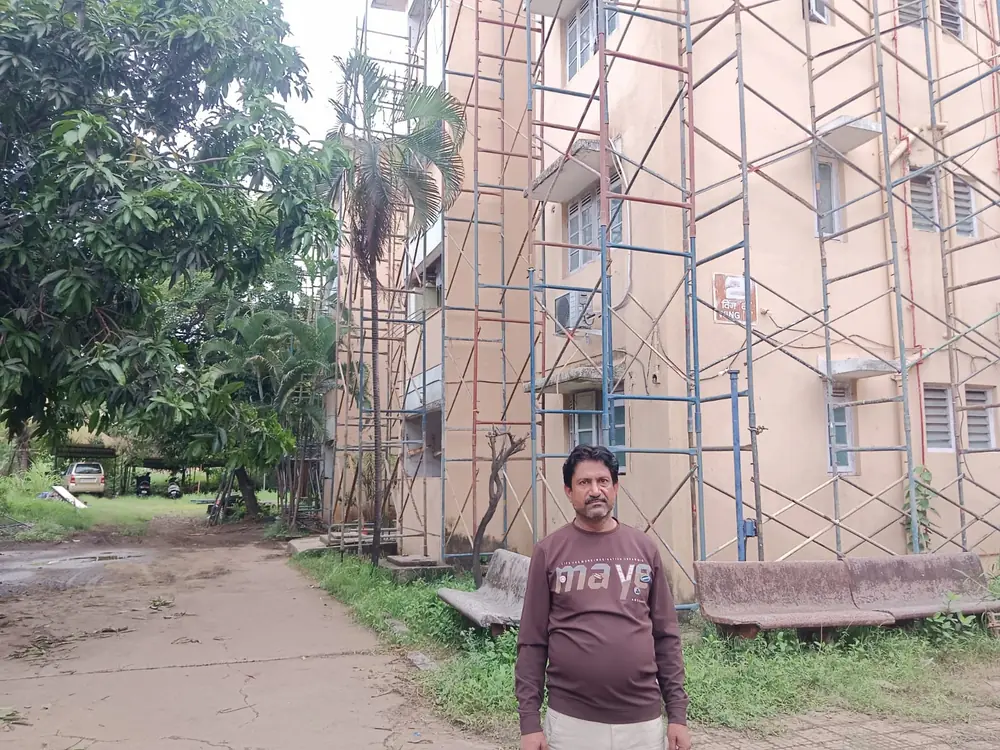
Erection, dismantling or combined labour scope
The labour quotation should describe the scaffold system, work limits, number of stages, dates, material responsibility and handover point. Design, engineering, transport, material supply, permits, inspections and continuous supervision should not be assumed unless they are expressly included.
| Labour requirement | Possible scope to define |
|---|---|
| Erection only | Movement within the agreed work area and assembly of the confirmed H-frame, MS H-frame or Cuplock arrangement |
| Dismantling only | Controlled removal, lowering, segregation, counting support and stacking or handover as agreed |
| Erection and dismantling | Both work stages scheduled around the project programme with responsibilities stated for the period in between |
| Authorised alterations | Planned changes instructed through the designated project authority and included only when agreed |
Related services: scaffolding rental with labour options · scaffolding material supply in Mumbai
Labour for H-frame, MS H-frame and Cuplock scaffolding
Labour requirements can be discussed for suitable H-frame, MS H-frame and Cuplock work. Each system has different frames or standards, connections, braces, platforms and erection sequences, so the material and planned arrangement should be identified before a team is scheduled.
State whether the work is a straight façade, an internal area, a multi-level access arrangement or another configuration. Working height alone does not describe the labour requirement; length, bay layout, number of lifts, access, ties, platforms, obstructions and work sequencing also affect the scope.
System details: H-frame scaffolding · Cuplock scaffolding · scaffolding system comparison
When scaffolding material comes from another supplier
An erection-only or dismantling-only enquiry may involve material owned by the client or supplied by another contractor. Share the system, component list and responsible contact before scheduling. Material should be complete, compatible, in suitable condition and available in the agreed work area.
The quotation should state who resolves missing or incompatible components, provides replacements, confirms the layout and accepts the erected scaffold. Labour attendance should not be treated as confirmation that an incomplete or unidentified material set is suitable for use.
Material planning: scaffolding materials and parts guide · scaffolding safety responsibilities
Information needed before labour is scheduled
| Required detail | Planning purpose |
|---|---|
| Scaffold system and component ownership | Confirms familiarity, compatibility and material responsibility |
| Site location and access restrictions | Supports manpower, timing and movement planning |
| Height, length, levels and layout | Indicates the scale and complexity of work |
| Approved plan or responsible site contact | Defines instructions, changes and handover authority |
| Work hours and programme | Coordinates labour with other site activities |
| Hazards and site controls | Identifies power lines, traffic, public areas, weather and exclusion zones |
| Photographs or approved drawings | Provides context for the initial discussion and planned arrangement |
A typical scaffolding erection workflow
- Confirm the work area, foundation preparation, material and planned arrangement.
- Establish access control and coordinate the erection zone with the site team.
- Erect progressively while installing required bases, braces, ties, platforms and protection in sequence.
- Address changes through the designated competent authority rather than informal site instructions.
- Complete the agreed handover or inspection process before normal use begins.
A controlled scaffolding dismantling workflow
Altering or dismantling a scaffold changes its stability and worker protection. Ties, braces, platforms and access should be removed in a planned sequence under competent supervision, with an exclusion zone for people who are not involved.
Components should not be dropped or thrown. Material should be lowered, inspected for obvious damage and stacked so it can be counted, transported or returned safely.
- Confirm that the scaffold is released for dismantling and identify the authorised sequence.
- Establish the agreed exclusion zone and coordinate other site activity around it.
- Remove components progressively without leaving an unstable partial arrangement.
- Lower and segregate material rather than dropping or throwing components.
- Stack or hand over material according to the agreed counting and transport responsibility.
Site responsibilities should be clear
The contractor, property manager, scaffold provider and labour team may have different responsibilities. Before work starts, confirm who provides the design or layout, foundation preparation, material, electrical clearance, permits, inspection, daily control, fall-protection plan and public segregation.
Clear responsibility is especially important when material comes from one supplier and labour from another. Compatibility and completeness should be confirmed before erection begins.
Before work begins: review scaffolding safety planning · use the scaffolding planning guide
Scaffolding labour areas and scheduling in Mumbai
Preeti Scaffolding is based in Sakinaka and Kurla West and accepts suitable labour enquiries across Mumbai city and suburbs, including Andheri, Powai, Ghatkopar, Chembur, Bandra, Goregaon, Malad, Borivali, Bhandup and Mulund, as well as Thane and Navi Mumbai.
Availability depends on the scaffold system, erection or dismantling scope, site access, programme and material readiness. Share preferred dates and the precise project location; photographs can support an initial discussion but do not replace site confirmation.