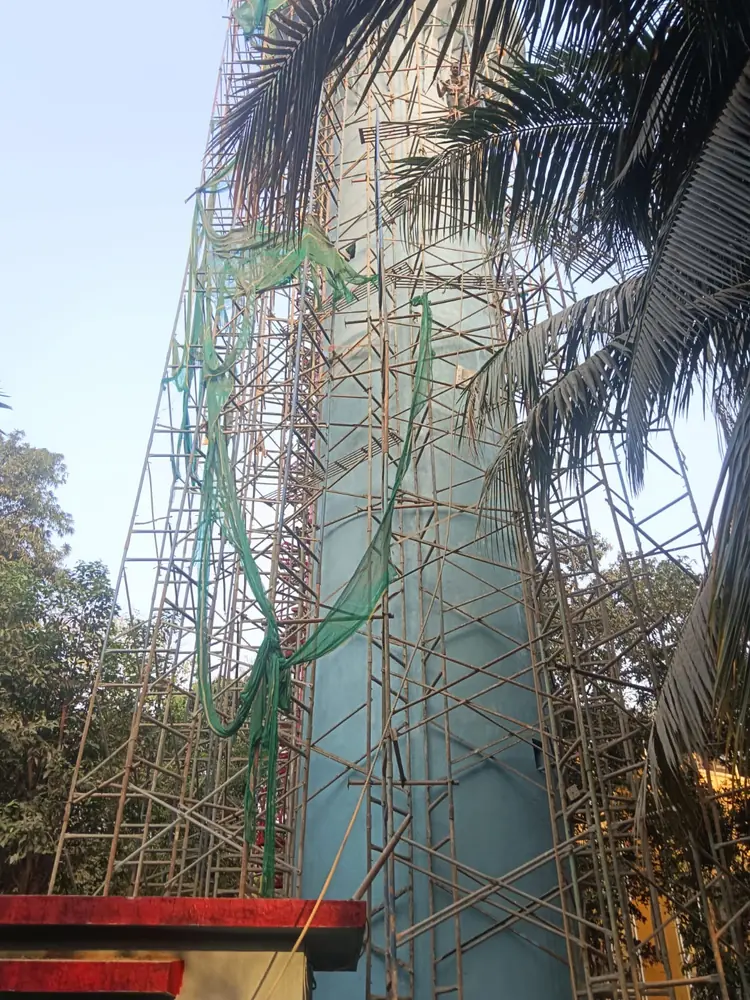
1. Plan the scaffold before material reaches the site
Define the work area, intended loads, height, access points, number of working levels, building geometry, ground conditions and interfaces with other trades. Complex or non-standard arrangements may require a design and calculations by a suitably qualified person.
The erection, use and dismantling sequence should be understood by those supervising and carrying out the work. Manufacturer instructions and project requirements should remain available to the team.
2. Confirm foundation and support conditions
- Use a firm, level foundation capable of supporting the scaffold and intended loads.
- Check for basements, drains, voids, soft fill, slopes and surfaces that may settle.
- Use base plates, sole arrangements or adjustable components as specified—not loose blocks or improvised packing.
- Confirm that roof, floor, bracket or suspension support points can resist the loads imposed on them.
3. Maintain stability and structural completeness
Install braces, ties, anchors, outriggers and other restraints as the scaffold is erected. Do not remove a tie or brace for convenience unless the alteration has been assessed and any required replacement restraint is installed.
Sheeting, debris netting and enclosed surfaces can substantially increase wind loading. Their use should be included in the scaffold plan rather than added after erection without review.
4. Provide safe platforms and access
- Use complete, properly supported platforms suitable for the intended work.
- Provide designed ladders, stairways or access bays instead of climbing braces.
- Protect open platform sides and ends with the required guardrail system.
- Use toe boards, screens, controlled storage or other measures for falling-object risks.
- Keep platforms and access routes clear of loose materials, damaged decks and trip hazards.
5. Control loading and component compatibility
The scaffold and each platform must be used within the planned duty and loading. Material should not be stockpiled merely because space is available. Loading bays and hoists introduce concentrated loads that require specific consideration.
Do not force together incompatible parts, modify components without approval or use damaged members. A connection that appears to fit may not have the intended strength or locking action.
6. Inspect at the right times
Inspections should be performed by a competent person whose knowledge and experience match the scaffold type and complexity. Defects and corrective actions should be recorded as required by the project and applicable rules.
| Inspection point | What it should address |
|---|---|
| Before first use | Completion, foundation, ties, braces, platforms, access and protection |
| At required periodic intervals | Condition, unauthorised changes, settlement, damage and housekeeping |
| After alteration | Whether the changed configuration follows the revised plan |
| After severe weather or impact | Any event that may have affected stability or structural integrity |
| During routine use | Visible defects, missing parts, overloading and blocked access |
7. Manage weather, electricity, traffic and the public
- Assess high winds, storms and the wind effect of sheeting or netting.
- Maintain required clearance from exposed electrical lines and equipment.
- Separate erection and dismantling zones from workers, vehicles and the public.
- Protect entrances and areas below where falling objects could cause injury.
- Control vehicle impact risks with barriers, routes or other site measures.
- Mark incomplete or unavailable scaffolds and prevent unauthorised access.
8. Use competent erection and dismantling teams
Erection, alteration and dismantling create changing fall and stability risks. The work should be performed by trained and experienced people under competent supervision, using a sequence that maintains stability and protection as the structure changes.
This guide is general education, not a scaffold design or legal checklist. Mumbai projects should confirm the current Indian legal, client, manufacturer and site-specific requirements applicable to their work.